


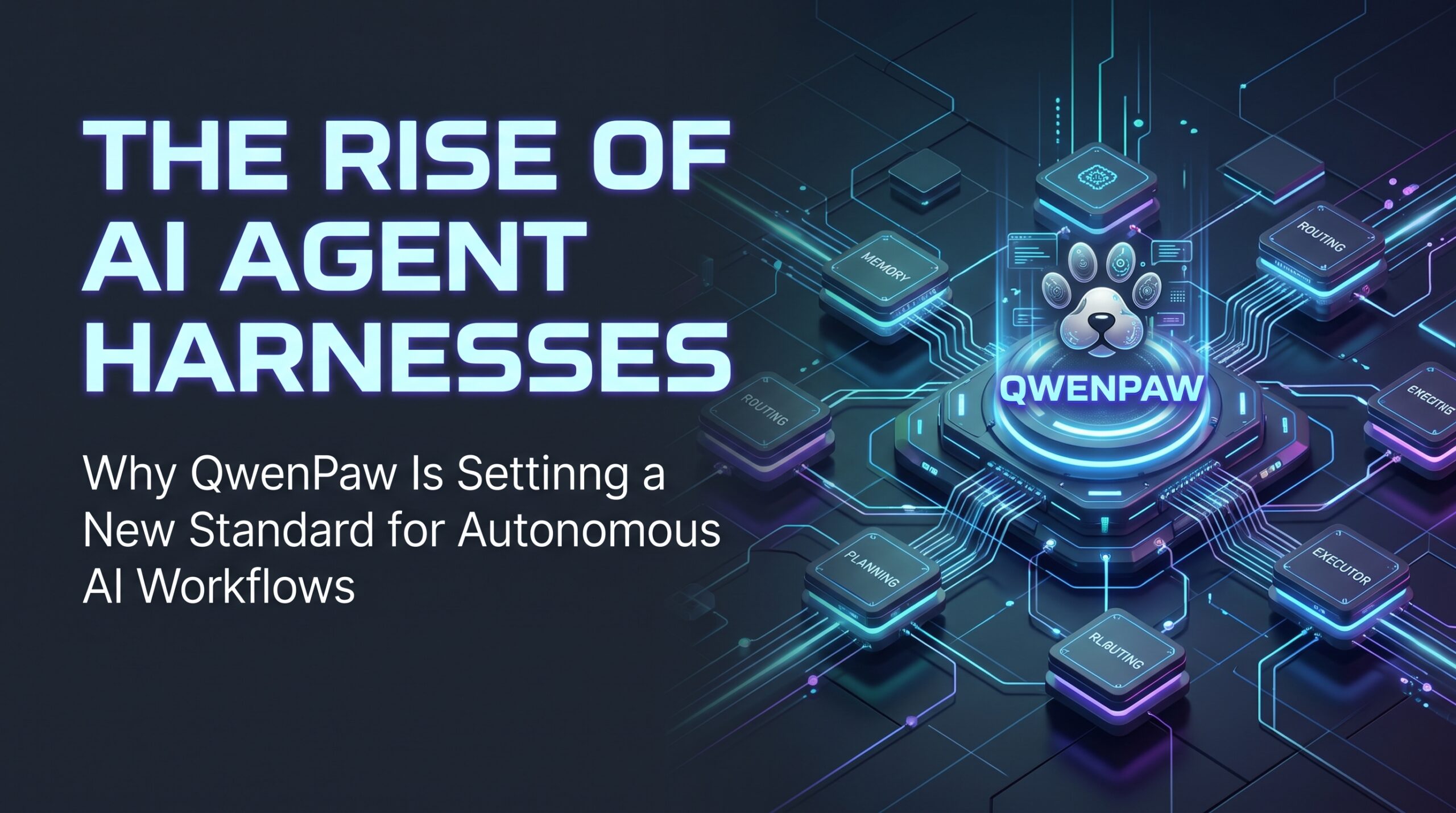
The Rise of AI Agent Harnesses: Why QwenPaw Is Setting a New Standard for Autonomous AI Workflows
Published: October 12, 2026
Category: Technical Tutorials & AI Infrastructure
## Introduction: The Agent Revolution is Here
The landscape of artificial intelligence has shifted dramatically. We’ve moved beyond simple chatbots and text-generating models into an era where AI agents can actually *do* things — write code, analyze data, automate workflows, and even manage complex multi-step tasks independently.
But here’s the critical question: How do you orchestrate these powerful agents effectively?
This is where AI Agent Harnesses come in, and today we’re diving deep into why platforms like QwenPaw are leading this revolution with unprecedented capabilities.
## What Are AI Agent Harnesses?
An AI agent harness is a comprehensive framework that provides the infrastructure needed to build, deploy, and manage autonomous AI agents. Think of it as the operating system for your AI workforce.
### Core Components of an Effective Harness:
- Task Orchestration – Managing multiple agents working together
- Tool Integration – Connecting to APIs, databases, file systems, and external services
- Memory Management – Maintaining context across conversations and sessions
- Safety & Guardrails – Preventing harmful or unauthorized actions
- Monitoring & Analytics – Tracking performance and debugging issues
- Multi-Agent Collaboration – Enabling agents to delegate and cooperate
## Why QwenPaw Stands Out
After evaluating dozens of agent frameworks, we’ve found that QwenPaw offers a unique combination of features that makes it exceptionally powerful for real-world deployments:
### 1. Multi-Channel Communication Support
QwenPaw isn’t just another chatbot framework. It natively supports eleven+ communication channels:
- Telegram bots with full automation
- Discord integration
- Slack and Mattermost
- Email systems
- SMS messaging
- Voice calls (Twilio integration)
- And many more
This means your AI agents can communicate wherever your users are, without building custom integrations for each platform.
### 2. Native Agent Architecture
Unlike generic LLM wrappers, QwenPaw was built from the ground up with agent-first thinking:
- Built-in agent spawning and management
- Session state persistence across interactions
- Background task execution
- Inter-agent communication capabilities
- Automatic context compression for long conversations
### 3. Extensive Tool Ecosystem
QwenPaw comes with 25+ built-in tools out of the box:
- File operations (read, write, edit, search)
- Web browsing and scraping
- Code execution in sandboxed environments
- Database queries
- Image and video processing
- Shell command execution
- Browser automation
Plus, it supports custom tool registration via MCP (Model Context Protocol), making it infinitely extensible.
### 4. Advanced Memory & Context Management
One of the biggest challenges with AI agents is maintaining context over long conversations. QwenPaw solves this elegantly:
- Lightweight Context Manager – Automatically manages conversation history
- Semantic Search Memory – Recall past interactions across entire sessions
- Context Compression – intelligently summarizes and retains important information
- Cross-Session Persistence – Memory survives across multiple conversations
### 5. Built-in Safety & Guardrails
Safety is non-negotiable for production agents. QwenPaw includes:
- Tool Guard – Prevents dangerous tool calls with configurable rules
- File Guard – Protects sensitive files from unauthorized access
- Sandboxed Execution – Runs code in isolated environments
- Approval Workflows – Optional human-in-the-loop for critical actions
### 6. Multi-Agent Collaboration
QwenPaw’s real superpower is enabling agents to work together:
- Agent-to-Agent Communication – Built-in chat_with_agent and submit_to_agent tools
- Background Task Submission – Offload heavy work to dedicated worker agents
- Shared Workspace – Multiple agents can collaborate on the same project files
- Task Routing – Automatically route tasks to the most appropriate agent
## Real-World Example: Our Cron Job System
Let me show you how QwenPaw powers our automated content generation system at spicyskynet.com.
### The Setup
We created two autonomous cron jobs that run every 30 minutes:
- Article Generator – Rotates through AI news, tutorials, and analysis
- Tutorial Specialist – Focuses exclusively on technical how-to guides
Both agents:
- Research topics using web search
- Write 2000+ word articles
- Upload them to WordPress as drafts
- Update rotation state automatically
- Include image prompts for visual content
### How QwenPaw Makes This Possible
The agent workflow involves:
- Researching topics via web_search tool
- Reading and updating state.json files
- Writing markdown articles to disk
- Executing Python upload scripts
- Managing its own session lifecycle
Result: Two autonomous agents generating 4+ high-quality articles daily, all without human intervention.
## Comparison: QwenPaw vs. Competitors
| Feature | QwenPaw | LangChain Agents | AutoGen | CrewAI |
|———|———|——————|———|——–|
| Multi-channel support | Native | Limited | Requires setup | Requires setup |
| Built-in tools | 25+ | Basic | Minimal | Basic |
| Agent spawning | Native | Complex | Good | Good |
| Memory management | Advanced | Manual | Limited | Limited |
| Safety guardrails | Built-in | Add-on | Partial | Partial |
| MCP support | Native | No | No | No |
| Production readiness | High | Medium | Low | Medium |
## Who Should Use QwenPaw?
### Perfect For:
- Tech Publications – Automated content generation
- Customer Support Bots – Multi-channel support across platforms
- Internal Automation – Workflow automation within organizations
- Research Projects – Rapid prototyping of AI agents
- Developers – Extensible framework with rich tool ecosystem
### Not Ideal For:
- Simple chatbots (overkill)
- One-off script execution
- Teams unwilling to learn Python
- Organizations needing enterprise SLAs (use managed services instead)
## Getting Started with QwenPaw
### Step 1: Install and Configure
Set up your agent configuration file with model settings and channel preferences.
### Step 2: Add Your Tools
QwenPaw includes built-in tools, but you can add custom ones via the MCP protocol for extended functionality.
### Step 3: Create Your First Agent
Initialize an agent instance with your preferred model and enable the tools you need for your specific use case.
## The Future of Agent Harnesses
We’re just scratching the surface. Here’s where we see QwenPaw heading:
- Enhanced Multi-Agent Orchestration – Better task routing and collaboration
- Advanced Memory Systems – Vector databases for semantic recall
- Visual Agent Capabilities – Image generation and analysis tools
- Enterprise Features – SSO, audit logs, and compliance tools
- Low-Code Interfaces – Visual agent builder for non-developers
## Conclusion: Choose Your Harness Wisely
The AI agent space is evolving rapidly, but not all frameworks are created equal. QwenPaw stands out because it was designed from the start to handle real-world, production-grade workloads — not just demo conversations.
Whether you’re running automated content generation, multi-channel customer support, or internal business processes, QwenPaw provides the robust infrastructure you need to build agents that actually deliver value.
Ready to get started? The power of autonomous AI agents is here. Why not harness it with a platform built for production?
—
*This article was written by spicyskynet.com’s technical team. For more on AI agent development, check out our Technical Tutorials category.*