The Rise of the Software Factory: Architecting Autonomous Agentic Workforces
The era of the "AI Copilot" is reaching its natural conclusion. For the past year, developers have grown accustomed to sidecars—LLMs that sit quietly in a VS Code window, waiting for a prompt to suggest a function or fix a syntax error. But as the industry pivots from simple chat interfaces to compl
The era of the "AI Copilot" is reaching its natural conclusion. For the past year, developers have grown accustomed to sidecars—LLMs that sit quietly in a VS Code window, waiting for a prompt to suggest a function or fix a syntax error. But as the industry pivots from simple chat interfaces to complex agentic workflows, we are witnessing a fundamental shift in the paradigm of software engineering.
We are moving away from "AI as a tool" and toward "AI as a workforce."
This transition is the core thesis of Project Slimemold, an ambitious experiment in building an autonomous "software factory." Rather than a single user prompting a single model, Slimemold aims to construct a decentralized ecosystem of specialized agents capable of ideating, prototyping, implementing, and deploying entire software lifecycles with minimal human intervention. This isn't just about writing code; it is about building a self-sustaining machine that turns high-level concepts into production-ready software.
The Hardware Mandate: Scaling for Concurrency
Before a single line of agentic logic can be written, there is a brutal reality to face: autonomy is computationally expensive. When you move from a single LLM call to a swarm of agents interacting, running Docker containers, and simulating mobile testing environments, the resource requirements explode.
To support this "factory" model, the infrastructure must move beyond consumer-grade laptops. The Slimemold architecture requires significant overhead to manage concurrent agent processes. This necessitates high-spec hardware—specifically machines like the Mac Studio with M5 Max silicon and 128GB of unified memory—to ensure that the "brain" of the operation doesn't stall when the "hands" (the implementer agents) start spinning up heavy virtual machines or testing suites.
In a software factory, latency isn't just an inconvenience; it is a systemic failure. If the resource management layer cannot provide enough headroom for an agent to run a local test suite, the entire production line grinds to a halt.
Architecting the Agentic Hierarchy
The most significant departure from traditional AI usage is the move toward a multi-layered, hierarchical agent structure. In Slimemold, agents do not simply talk to a human; they talk to each other.
The Steward Layer: Governance and Tie-Breaking
One of the greatest risks in autonomous systems is "hallucination deadlock," where two agents disagree on a technical implementation and enter an infinite loop of correction. To mitigate this, the project introduces a "Steward" layer.
Rather than relying on a single model, the system utilizes a governance layer composed of multiple agents powered by different LLM backends:
- Enki (Claude-powered): Focused on logical cohesion and architectural integrity.
- Brigid (Codex-powered): Optimized for deep code implementation and syntax.
- Lu Ban (Pi-powered): Serving as a secondary perspective to provide diverse reasoning paths.
By using different model architectures, the system creates a natural tie-breaking mechanism. If Enki and Brigid disagree on a deployment strategy, the diversity of their training data allows for a more robust consensus-building process.
The Resource Manager: Hestia
In a human factory, you need a floor manager to ensure machines aren't overheating and power isn't being wasted. In an AI factory, you need Hestia.
Hestia is a dedicated agent tasked solely with resource management. While the "Implementer" agents are busy writing code, Hestia is monitoring CPU cycles, RAM consumption, and the lifecycle of Docker containers. If an agent creates a runaway process or leaks memory during a testing cycle, Hestia is responsible for the cleanup. This separation of concerns is critical: the agents writing the code should not be the ones responsible for managing the hardware they are running on.
The Workflow: From Trend to Pull Request
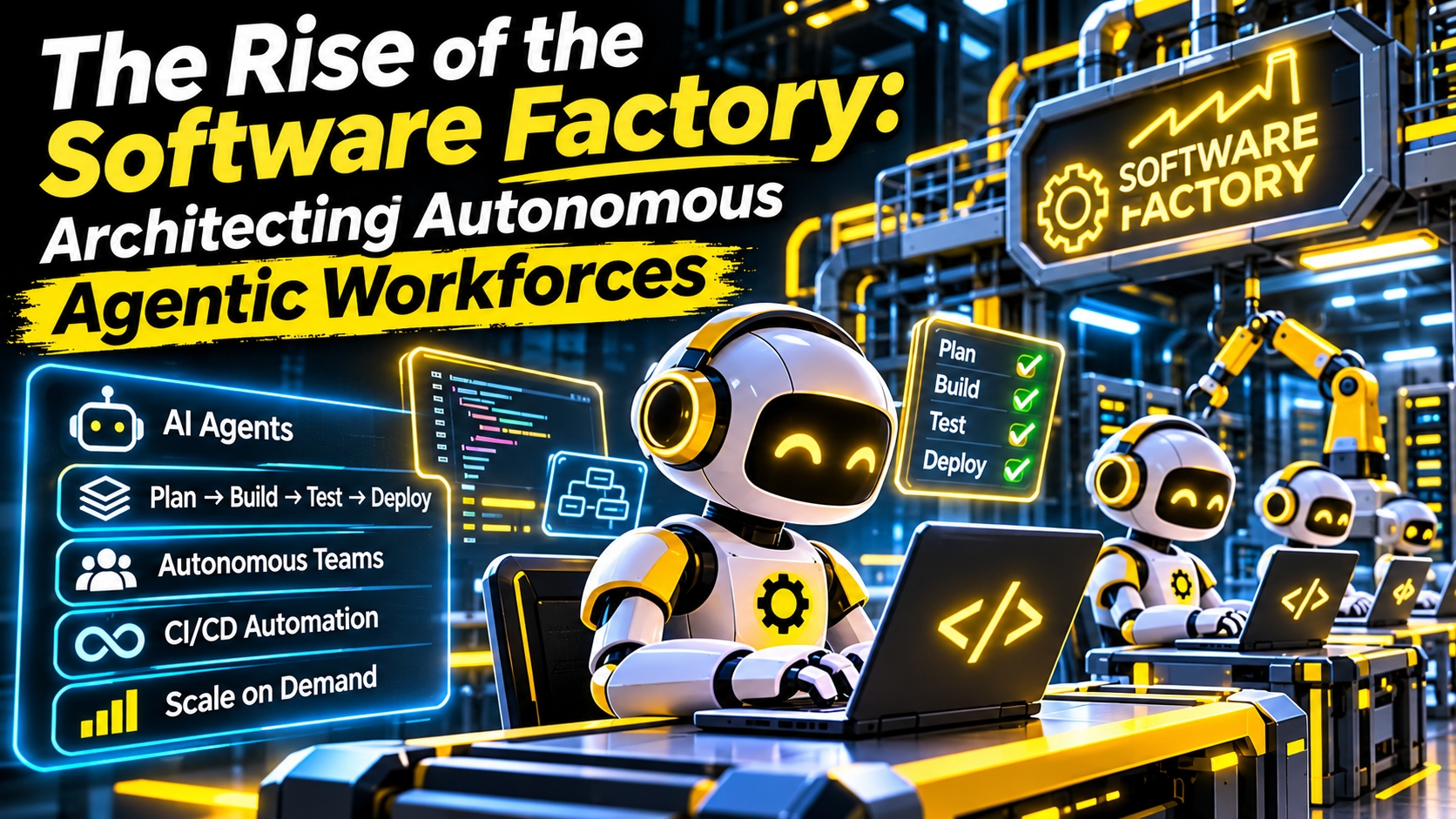
The ultimate goal of the Slimemold project is a seamless pipeline that mimics a professional DevOps lifecycle. The envisioned workflow looks like this:
- Ideation: A "Product Lead" agent monitors external trends or news feeds.
- Pitching: The Product Lead generates a feature proposal and sends it to the human supervisor via a messaging platform like Telegram.
- Approval: The human provides a simple "Go" or "No-go."
- Coordination: Once approved, the Product Lead coordinates a team of "Implementer" agents.
- Implementation & QA: Implementers write the code, spin up VMs or mobile device emulators to run tests, and verify the output.
- Deployment: If all tests pass, the agents autonomously open a Pull Request.
To facilitate this, the architecture moves away from direct API calls toward an asynchronous communication model. By implementing "agent mailboxes" and "message boards," agents can leave tasks for one another, allowing for a non-linear, highly parallelized development process.
Security in an Autonomous Environment
Giving an AI agent the ability to write code and interact with a file system is inherently dangerous. The "Software Factory" concept introduces a massive surface area for security vulnerabilities, particularly regarding Personal Access Tokens (PATs) and organizational permissions. How do you prevent an agent from accidentally (or intentionally) overstepping its bounds and accessing sensitive credentials?
The Slimemold approach to security is rooted in strict isolation and the principle of least privilege:
- Dual-Account Isolation: The hardware setup utilizes a dual-account system. One account is reserved for the human administrator, while a second, non-admin account is dedicated to the agents.
- Dotfile Splitting: To prevent agents from accessing sensitive configuration files or environment variables used by the human developer, the system employs split dotfiles. This ensures the agent's environment is a "clean room," isolated from the primary development tooling.
- Permission Guardrails: The ongoing challenge remains managing the tension between "high access" (required to run tests and deploy) and "low risk" (required to prevent hijacking).
The Road Ahead: Uncertainty and Scale
While the blueprint for a software factory is technically sound, the project is still in its infancy. We are currently in "Week 1," and many of the most difficult questions remain unanswered.
Can an agentic swarm truly scale from a single feature to a complex, multi-repo ecosystem? How will the system handle the subtle biases inherent in the training data of the different LLMs used in the Steward layer? And perhaps most importantly, can we truly trust a decentralized workforce to maintain the security standards of a modern enterprise?
The transition from Copilot to Factory is not just a software upgrade; it is a fundamental reimagining of what it means to "build." We are no longer just writing instructions; we are designing the organisms that write the instructions.
# Conceptual Agent Communication Protocol
class AgentMailbox:
    def __init__(self, agent_id):
        self.agent_id = agent_id
        self.inbox = []

    def receive_message(self, sender, payload, priority="normal"):
        message = {
            "from": sender,
            "content": payload,
            "priority": priority
        }
        self.inbox.append(message)
        print(f"[{self.agent_id}] Received message from {sender}")

    def fetch_next(self):
        if not self.inbox:
            return None
        return self.inbox.pop(0)

---

### Sources

- [Slimemold Diaries Week 1: Building a Software Factory](https://dev.to/nlsmdn/slimemold-diaries-week-1-building-a-software-factory-mn6) — DEV Community · AI