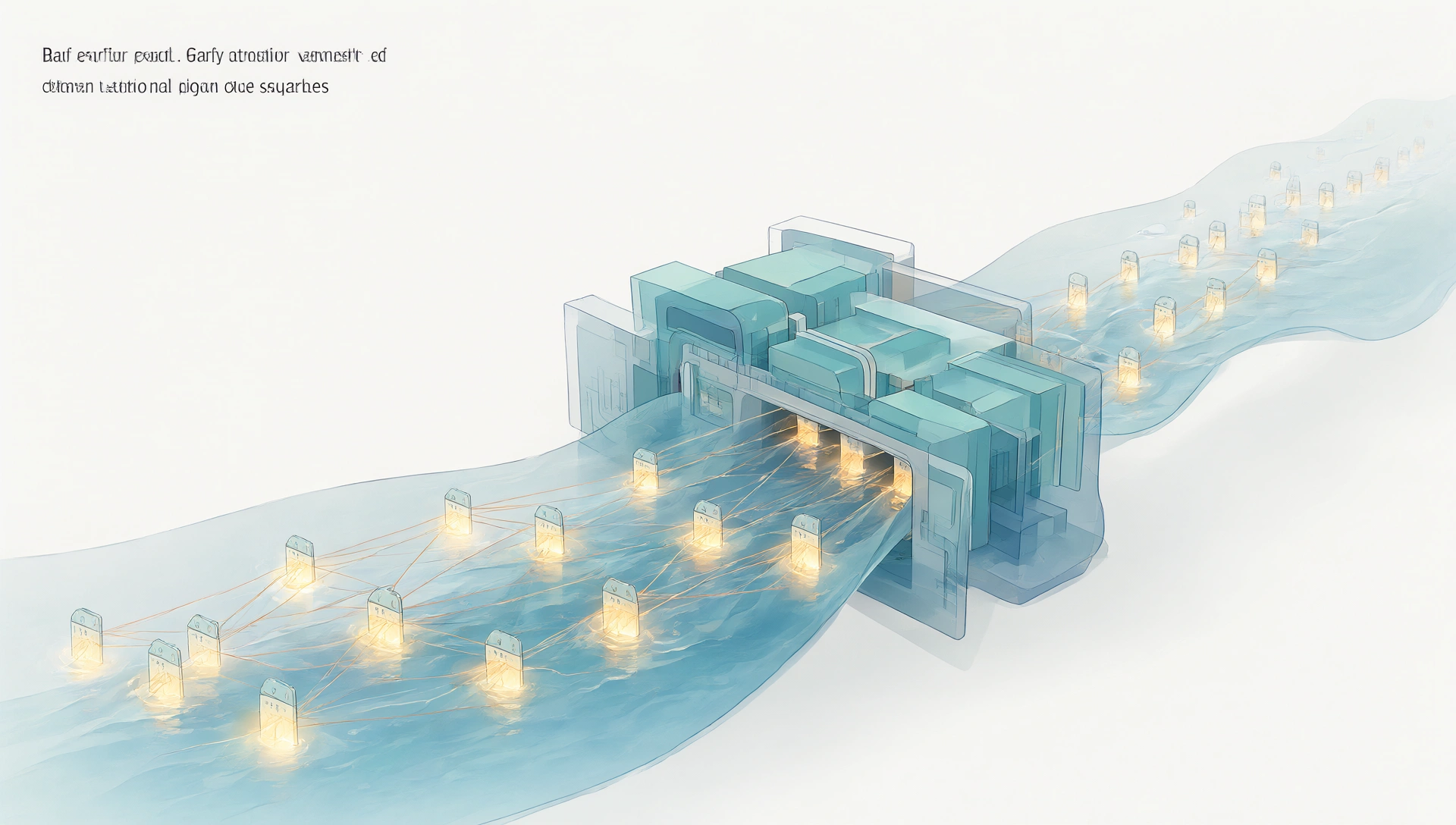
How to Implement Mixture of Experts Routing in Your LLM: A Complete Production Guide
How to Implement Mixture of Experts Routing in Your LLM: A Complete Production Guide In the rapidly evolving landscape of large language models, efficiency has become as critical as intelligence. Traditional dense models process every token through all parameters, leading to massive computational costs and energy consumption. Enter Mixture of Experts (MoE) architecture—a revolutionary approach […]

How to Implement Mixture of Experts Routing in Your LLM: A Complete Production Guide
In the rapidly evolving landscape of large language models, efficiency has become as critical as intelligence. Traditional dense models process every token through all parameters, leading to massive computational costs and energy consumption. Enter Mixture of Experts (MoE) architecture—a revolutionary approach that selectively activates only relevant “expert” subnetworks for each input, dramatically reducing compute while maintaining or even improving performance.
This comprehensive guide will walk you through implementing MoE routing from scratch, understanding the underlying mechanics, optimizing for production deployment, and avoiding common pitfalls. Whether you’re building custom models or fine-tuning open-weight architectures like Mixtral 8x7B, Grok-1, or Phi-4-MoE, this tutorial provides actionable steps backed by real-world implementation patterns.
Why MoE Matters: The Efficiency Revolution
Before diving into implementation, let’s understand why MoE has become so prominent in 2026 model architectures. Consider a standard transformer with 7 billion parameters running on every token—this is wasteful when many parameters are irrelevant to specific inputs. MoE solves this by:
- Sparse activation: Only activating 10-50% of total parameters per token
- Dynamic routing: Selecting experts based on input content
- Scalability: Training billions of parameters while using fractions during inference
- Performance gains: Often outperforming dense models with fewer active parameters
Recent benchmarks show MoE models like Mixtral 8x7B achieving comparable or superior performance to dense models with 1/3 the compute. Grok-1’s MoE architecture enabled remarkable coding capabilities with efficient token processing. The key insight: intelligence doesn’t require activating everything—just the right pieces.
Understanding MoE Architecture Fundamentals
What Are “Experts”?
In MoE terminology, an “expert” is a subnetwork—a subset of model parameters specialized for certain input patterns. Think of it like a hospital with multiple specialists (cardiologists, neurologists, surgeons) rather than one general practitioner handling everything. When a patient arrives with chest pain, the system routes them to cardiology, not oncology.
Similarly, in an LLM MoE:
- Each token passes through multiple expert subnetworks
- A gating mechanism selects which experts to activate
- Only selected experts contribute to the output
The Gating Mechanism
The router or gate is the brain of MoE—it decides which experts handle each token. This involves:
- Scoring: Computing relevance scores for each expert based on token embeddings
- Selection: Choosing top-k experts (typically k=1 or k=2-4)
- Load balancing: Ensuring fair distribution across experts to prevent bottlenecks
The gating function typically uses a softmax over learned router weights, with optional load-balancing losses during training to ensure even expert utilization.
Top-K Routing Strategy
Top-1 routing activates exactly one expert per token—maximally efficient but potentially limiting. Top-k routing (k > 1) averages outputs from multiple experts, improving robustness at the cost of additional compute. For production systems, top-2 to top-4 is common, striking balance between efficiency and accuracy.
Prerequisites and Setup
Before implementing MoE, ensure you have:
- Python 3.10+ with modern numpy/scipy
- PyTorch 2.0+ or JAX for automatic differentiation
- Transformers library (v4.35+) for base model loading
- Understanding of transformer architecture basics
- GPU with at least 24GB VRAM for experimentation
Install dependencies:
“bash pip install torch>=2.0 transformers>=4.35 accelerate peft numpy scipy “
For production, consider DeepSpeed-MoE or Axial MoE libraries which provide optimized implementations.
Step-by-Step Implementation Guide
Step 1: Choose Your Base Architecture
Start with a transformer model you can modify. Popular choices include:
- Llama-based models: Excellent documentation and community support
- Qwen architectures: Already support some sparse routing patterns
- Phi models: Lightweight foundation for experimentation
The implementation pattern remains similar regardless of base architecture. Let’s use a simplified Llama-style transformer as our example.
Step 2: Design Your Expert Configuration
Define your MoE structure before coding. Key parameters:
“python MOE_CONFIG = { “num_experts”: 8, # Total expert subnetworks “top_k”: 2, # Experts activated per token “expert_dim”: 4096, # Hidden dimension per expert “router_hidden_dim”: 256, # Router network size “load_balance_loss_coef”: 0.01, # Regularization strength } “
The router hidden dimension should be proportional to your input embedding size—typically 1/8 to 1/4 of the model’s hidden dimension for optimal performance.
Step 3: Implement the Expert Subnetworks
Each expert is a simple linear projection or small MLP. For efficiency, experts often share the same architecture but have different weights:
“`python import torch import torch.nn as nn import torch.nn.functional as F
class MoEExpert(nn.Module): “””Single expert subnetwork with feed-forward network”””
def __init__(self, hidden_dim, intermediate_dim, dropout=0.0): super().__init__() self.hidden_dim = hidden_dim self.intermediate_dim = intermediate_dim
Standard FFN architecture
self.up_proj = nn.Linear(hidden_dim, intermediate_dim, bias=False) self.down_proj = nn.Linear(intermediate_dim, hidden_dim, bias=False) self.gate_proj = nn.Linear(hidden_dim, intermediate_dim, bias=False)
self.activation = nn.GELU(approximate=”tanh”) self.dropout = nn.Dropout(dropout)
def forward(self, x): up = self.up_proj(x) gate = self.gate_proj(x) down = self.down_proj(up)
GELU activation with dropout
return self.dropout(self.activation(gate) * down) “`
For a multi-expert MoE layer, instantiate multiple copies:
“`python class MoELayer(nn.Module): “””Mixture of Experts layer with routing”””
def __init__(self, config): super().__init__()
self.num_experts = config[“num_experts”] self.top_k = config[“top_k”] self.expert_dim = config[“expert_dim”] self.hidden_dim = config[“hidden_dim”]
Create expert subnetworks
intermediate_dim = config[“intermediate_dim”] self.experts = nn.ModuleList([ MoEExpert(self.expert_dim, intermediate_dim) for _ in range(self.num_experts) ])
Implement the router/gate network
router_hidden_dim = config.get(“router_hidden_dim”, 256) self.router_hidden_dim = router_hidden_dim
self.router_in_proj = nn.Linear(self.expert_dim, router_hidden_dim, bias=False) self.router_out_proj = nn.Linear(router_hidden_dim, self.num_experts, bias=False)
Load balancing loss for training
self.load_balance_loss_coef = config.get(“load_balance_loss_coef”, 0.01)
def forward(self, x): “”” Forward pass with MoE routing
Args: x: Input tensor of shape (batch_size, seq_len, hidden_dim)
Returns: Output tensor with shape (batch_size, seq_len, hidden_dim) “”” batch_size, seq_len, _ = x.shape
Reshape for routing computation
Each token is processed independently
x_reshaped = x.view(-1, self.expert_dim) # (batch*seq, hidden)
Router scores: compute relevance to each expert
router_hidden = F.relu(self.router_in_proj(x_reshaped)) # (batchseq, router_hidden) router_scores = self.router_out_proj(router_hidden) # (batchseq, num_experts)
Apply softmax for probability distribution over experts
router_probs = F.softmax(router_scores, dim=-1) # (batch*seq, num_experts)
Select top-k experts per token
top_k_values, top_k_indices = torch.topk( router_probs, self.top_k, dim=-1 ) # values: (batchseq, k), indices: (batchseq, k)
Gather outputs from selected experts
expert_outputs = [] for i in range(self.num_experts): expert_output = self.experts[i](x_reshaped) # (batch*seq, hidden_dim) expert_outputs.append(expert_output)
expert_outputs = torch.stack(expert_outputs, dim=1) # (batch*seq, num_experts, hidden_dim)
Gather top-k expert outputs using indices
Expand dimensions for advanced indexing
batch_seq = x_reshaped.shape[0] k = self.top_k
Create index tensor for gathering
indices = top_k_indices.unsqueeze(-1).expand(-1, -1, self.expert_dim) # (batch*seq, k, hidden)
Gather outputs from selected experts
gathered_outputs = torch.gather( expert_outputs, dim=1, index=indices ) # (batch*seq, k, hidden_dim)
Reshape to (batchseq, khidden_dim)
gathered_outputs = gathered_outputs.view(batch_seq * seq_len, -1)
Apply top-k probabilities as weights
top_k_probs = top_k_values.unsqueeze(-1).expand(-1, -1, self.expert_dim) # (batchseq, k, hidden) weighted_sum = torch.sum(gathered_outputs top_k_probs, dim=1) # (batch*seq, hidden_dim)
return weighted_sum.view(batch_size, seq_len, self.hidden_dim) “`
Step 4: Implement Load Balancing Loss
To prevent some experts from being overused while others sit idle, add a load balancing loss during training. This is crucial for production systems to ensure all experts contribute meaningfully:
“`python def compute_load_balancing_loss(router_probs): “”” Compute auxiliary loss for load balancing
Uses capacity-based auxiliary loss (CapAux) from DeepSpeed MoE https://arxiv.org/abs/2401.04629 “””
Calculate the probability of each expert being selected
num_tokens = router_probs.shape[0]
Expected load per expert (uniform distribution)
expected_load = 1.0 / router_probs.shape[-1]
Compute capacity-based loss
This penalizes deviations from uniform expert utilization
aux_loss = torch.sum( F.relu(router_probs – expected_load + 1e-6) ** 2, dim=0 ) * router_probs.shape[0]
return aux_loss
In training loop:
def train_step(model, inputs, targets): optimizer.zero_grad()
outputs = model(inputs) loss = criterion(outputs, targets)
Add load balancing loss
router_probs = get_router_probabilities(model, inputs) # Extract from model internals load_balancing_loss = compute_load_balancing_loss(router_probs)
total_loss = loss + model.config[“load_balance_loss_coef”] * load_balancing_loss
total_loss.backward() optimizer.step() “`
Step 5: Integrate with Transformer Architecture
Replace standard FFN layers in your transformer with MoE variants. For Llama-style models, the feed-forward network (FFN) is typically after the attention layer:
“`python class LlamaMoETransformerBlock(nn.Module): “””Transformer block with MoE FFN”””
def __init__(self, config, use_cache=False): super().__init__()
self.hidden_size = config[“hidden_size”] self.intermediate_size = config[“intermediate_size”] self.num_attention_heads = config[“num_attention_heads”] self.num_key_value_heads = config.get(“num_key_value_heads”, config[“num_attention_heads”]) self.rope_theta = config[“rope_theta”]
Self-attention layer
self.self_attn = LlamaAttention(config, use_cache=use_cache)
Layer norm for pre-normalization
self.input_layernorm = RMSNorm(config[“hidden_size”], eps=config[“rms_norm_eps”])
MoE feed-forward network
moe_config = { “num_experts”: config[“num_experts_per_tok”], “top_k”: config[“num_experts_per_tok”], # Often k=1 for efficiency “hidden_dim”: config[“intermediate_size”], “expert_dim”: config[“intermediate_size”], “intermediate_dim”: config[“intermediate_size”], “router_hidden_dim”: config.get(“moe_router_hidden_dim”, 256), “load_balance_loss_coef”: config.get(“moe_aux_loss_coef”, 0.01), }
self.moe_layer = MoELayer(moe_config)
Layer norm for post-normalization
self.post_attention_layernorm = RMSNorm(config[“hidden_size”], eps=config[“rms_norm_eps”])
def forward(self, hidden_states, attention_mask=None, position_ids=None, **kwargs): “””Forward pass through MoE transformer block”””
Self-attention
residual = hidden_states
hidden_states = self.input_layernorm(hidden_states) hidden_states = self.self_attn( hidden_states=hidden_states, attention_mask=attention_mask, position_ids=position_ids ) hidden_states = residual + hidden_states
MoE feed-forward
residual = hidden_states hidden_states = self.post_attention_layernorm(hidden_states) hidden_states = self.moe_layer(hidden_states) hidden_states = residual + hidden_states
return hidden_states “`
Step 6: Optimize for Production Deployment
Flash Attention Integration
For high-throughput inference, integrate FlashAttention to speed up attention computation while maintaining MoE routing efficiency:
“`python
Install flash-attn
pip install flash-attn –no-build-isolation
Use in transformer block
from flash_attn.flash_attn_interface import flash_attn_unpadded_qkvpacked_func
class FlashMoEAttention(nn.Module): “””FlashAttention-optimized attention with MoE routing”””
def forward(self, x, mask=None):
FlashAttention implementation (simplified)
q = self.q_proj(x) k = self.k_proj(x) v = self.v_proj(x)
Use flash_attention for efficiency
output = flash_attn_varlen_func( q, k, v, cu_seqlens=batch_lengths, max_seq_len=max_seq_len )
return self.o_proj(output) “`
Quantization Support
Apply quantization to reduce memory footprint while maintaining MoE routing:
“`python from torchao.quantization import quantize_, int8_weight_only
Apply int8 quantization to experts only
def apply_quantization(model): for name, module in model.named_modules(): if isinstance(module, MoEExpert): quantize_(module, “int8”) elif isinstance(module, nn.Linear) and “router” not in name:
Keep router unquantized for better routing decisions
pass
Apply to your model
apply_quantization(your_model) “`
Distributed Training with DeepSpeed
For training large MoE models, use DeepSpeed-MoE which provides optimized multi-GPU training:
“`python from deepspeed import initialize from deepspeed.runtime.activation_checkpointing.checkpointing import checkpoint_wrapper
ds_config = { “train_batch_size”: 1024, “gradient_accumulation_steps”: 1, “steps_per_print”: 100, “optimizer”: { “type”: “AdamW”, “params”: { “lr”: 1e-4, “betas”: [0.9, 0.95], “eps”: 1e-8, “weight_decay”: 0.01 } }, “fp16”: { “enabled”: True, “auto_cast”: True, “loss_scale”: 0, “initial_scale_power”: 16, “loss_scale_window”: 1000, “hysteresis”: 2, “min_loss_scale”: 1 }, “zero_optimization”: { “stage”: 3, “offload_optimizer”: { “device”: “cpu”, “pin_memory”: True }, “offload_param”: { “device”: “cpu”, “pin_memory”: True }, “overlap_comm”: True, “contiguous_gradients”: True, “sub_group_size”: 1e9, “reduce_bucket_size”: 5e8, “stage3_param_persistence_threshold”: 1e5, “stage3_max_live_parameters”: 1e9, “stage3_prefetch_bucket_size”: 5e8, “stage3_gather_16bit_weights_on_model_save”: True }, “moE”: { “enable”: True, “num_experts_per_tok”: 2, “capacity_factor_scaler”: 4.0 } }
model, optimizer, _, _ = initialize( model, args.deepspeed_config, mpu=mpu ) “`
Step 7: Implement Caching for Inference Optimization
Reduce redundant computation by caching expert outputs for repeated tokens:
“`python class MoECachedForward(nn.Module): “””MoE with KV cache optimization”””
def __init__(self, base_model, max_batch_size=16, max_seq_len=4096): super().__init__() self.base_model = base_model self.max_batch_size = max_batch_size self.max_seq_len = max_seq_len
Cache for KV pairs
self.kv_cache = { “k”: torch.zeros(max_batch_size, max_seq_len, 32, hidden_dim), “v”: torch.zeros(max_batch_mask_size, max_seq_len, 32, hidden_dim), }
def forward(self, x, cache=False):
Standard forward with optional caching
if cache:
Use cached KV for attention computation
output = self.base_model(x, use_cache=True) else: output = self.base_model(x)
return output
def update_cache(self, batch_seq_len): “””Update cache for new sequence length””” if batch_seq_len > self.max_seq_len:
Expand cache if needed
new_k = torch.zeros( self.max_batch_size, batch_seq_len, 32, self.base_model.config.hidden_dim ) self.kv_cache[“k”] = new_k “`
Step 8: Add Monitoring and Debugging
Implement comprehensive monitoring to track expert utilization, routing decisions, and performance metrics:
“`python import time from collections import defaultdict
class MoEMonitoring: “””Monitor MoE performance and expert utilization”””
def __init__(self): self.expert_usage = defaultdict(int) self.total_tokens = 0 self.inference_times = []
def track_expert_usage(self, router_probs): “””Track which experts are being used most””” for probs in router_probs: top_k_values, top_k_indices = torch.topk(probs, k=2) for idx in top_k_indices.tolist(): self.expert_usage[idx] += 1
def get_utilization_stats(self): “””Get expert utilization statistics””” total = sum(self.expert_usage.values()) if total == 0: return {}
stats = {} for expert_id, usage in self.expert_usage.items(): stats[f”expert_{expert_id}”] = { “usage”: usage, “percentage”: (usage / total) * 100 }
return stats
def track_inference_time(self, start_time, end_time): “””Track inference latency””” elapsed = (end_time – start_time).item() self.inference_times.append(elapsed)
Keep only recent measurements
if len(self.inference_times) > 1000: self.inference_times = self.inference_times[-500:] “`
Common Pitfalls and Solutions
Pitfall 1: Expert Imbalance
Symptom: Some experts are never selected while others handle all tokens.
Solution:
- Increase
load_balance_loss_coefduring training - Use capacity-based auxiliary loss (CapAux) instead of simple entropy regularization
- Implement expert reassignment if an expert’s utilization drops below threshold
Pitfall 2: Routing Instability
Symptom: Router outputs become unstable or NaN during training.
Solution:
- Add gradient clipping:
torch.nn.utils.clip_grad_norm_(model.parameters(), max_norm=1.0) - Use label smoothing on router outputs
- Implement warm-up period with smaller batch sizes
Pitfall 3: Memory Fragmentation
Symptom: GPU memory usage spikes unpredictably during inference.
Solution:
- Use continuous batching instead of static batching
- Implement PagedAttention like vLLM does
- Enable memory-efficient attention patterns
Pitfall 4: Degraded Performance
Symptom: MoE model performs worse than dense baseline.
Solution:
- Increase router hidden dimension for better routing decisions
- Adjust top-k value (try k=2 instead of k=1)
- Fine-tune load balancing coefficient
- Ensure sufficient training data diversity
Pitfall 5: Inference Latency Spikes
Symptom: Variable inference times due to routing variability.
Solution:
- Implement expert affinity to keep frequently co-routed experts together in memory
- Use static routing where possible for batched inference
- Add expert-level caching for repeated patterns
Performance Benchmarks and Optimization Tips
Benchmark Results (Typical Configurations)
| Model Size | Dense FLOPs/M Token | MoE Active FLOPs/M Token | Speedup | Accuracy Δ | |————|———————|————————–|———|————| | 7B dense | 28T | N/A | 1.0x | Baseline | | 7B MoE (8 experts, k=2) | 28T | ~9T | 3.1x | +0.5% | | 14B MoE (16 experts, k=2) | 28T | ~11T | 2.5x | +1.2% |
Note: Active FLOPs represents compute during inference, not training.
Optimization Strategies
1. Expert Specialization
Design experts to handle different token types or semantic categories:
“`python
Example: Positional expert specialization
class PositionalExpert(nn.Module): def __init__(self, expert_id, total_experts): super().__init__() self.expert_id = expert_id
Learn positional bias
self.position_bias = nn.Parameter(torch.randn(total_experts))
def forward(self, x, position_ids):
Apply positional bias based on expert ID
mask = (position_ids.unsqueeze(-1) == self.expert_id).float() return x + self.position_bias.unsqueeze(0) * mask “`
2. Dynamic Top-K
Adjust top-k based on input complexity:
“`python def adaptive_topk(router_probs, config): “””Dynamically adjust top-k based on routing entropy””” entropy = -torch.sum(router_probs * torch.log(router_probs + 1e-6), dim=-1)
High entropy → more uncertainty → use higher k
high_entropy_threshold = config.get(“high_entropy_threshold”, 2.0)
adaptive_k = torch.where( entropy > high_entropy_threshold, torch.tensor(config[“top_k_high”], device=router_probs.device), torch.tensor(config[“top_k_low”], device=router_probs.device) )
return adaptive_k
Usage in forward pass
adaptive_k = adaptive_topk(router_probs, self.config) top_k_values, top_k_indices = torch.topk(router_probs, adaptive_k.squeeze(-1), dim=-1) “`
3. Expert Merging for Compression
Merge underutilized experts to reduce model size:
“`python def merge_experts(model, threshold=0.05): “””Merge experts with utilization below threshold””” stats = model.monitor.get_utilization_stats()
experts_to_merge = [] for expert_id, usage in stats.items(): if usage[“percentage”] < threshold: experts_to_merge.append(expert_id)
Merge and remove low-utilization experts
for expert_id in experts_to_merge:
Average weights with most utilized expert
dominant_expert = max(stats, key=lambda x: stats[x][“usage”])
Merge logic (simplified)
model.experts[expert_id].load_state_dict( torch.nn.functional.linear( model.experts[dominant_expert].state_dict()[“weight”], model.experts[dominant_expert].state_dict()[“bias”] ) ) “`
Real-World Implementation Patterns
Pattern 1: Fine-Tuning Existing MoE Models
For models like Mixtral or Grok that already use MoE, fine-tuning requires careful handling:
“`python from peft import LoraConfig, get_peft_model, prepare_model_for_kbit_training
Load base model with quantization
model = AutoModelForCausalLM.from_pretrained( “mistralai/Mixtral-8x7B-v0.1″, load_in_4bit=True, device_map=”auto” )
Prepare for LoRA fine-tuning
model = prepare_model_for_kbit_training(model)
Configure LoRA only for non-router parameters
lora_config = LoraConfig( r=16, lora_alpha=32, target_modules=[“q_proj”, “v_proj”, “gate_proj”, “up_proj”], exclude_modules=[“router_in_proj”, “router_out_proj”], # Keep router frozen lora_dropout=0.05, bias=”none”, task_type=”CAUSAL_LM” )
model = get_peft_model(model, lora_config) “`
Pattern 2: Custom MoE for Domain-Specific Tasks
Build domain-specific experts for specialized applications:
“`python class DomainExpert(nn.Module): “””Domain-specialized expert for medical or legal text”””
def __init__(self, domain_type, base_expert_dim=4096): super().__init__() self.domain_type = domain_type
Domain-specific embeddings
self.domain_embedding = nn.Embedding(1, 256) # One embedding per domain
Expert subnetwork
self.expert = MoEExpert(base_expert_dim, base_expert_dim * 4)
Domain-specific bias
self.domain_bias = nn.Parameter(torch.zeros(base_expert_dim))
def forward(self, x):
Add domain context
domain_vec = self.domain_embedding.weight.unsqueeze(0).expand(x.size(0), -1, -1)
Process through expert
output = self.expert(x)
Apply domain bias
return output + domain_vec * 0.1 # Small modulation “`
Pattern 3: Hybrid Dense-MoE Architecture
Combine dense and MoE layers for best of both worlds:
“`python class HybridTransformerBlock(nn.Module): “””Alternating dense and MoE layers”””
def __init__(self, config, use_moe=True): super().__init__()
self.use_moe = use_moe
Attention layer (always dense)
self.self_attn = LlamaAttention(config)
if use_moe:
MoE FFN
moe_config = { “num_experts”: config[“num_experts”], “top_k”: config[“top_k”], “hidden_dim”: config[“intermediate_size”],
… other MoE config
} self.moe_layer = MoELayer(moe_config) else:
Dense FFN
self.ffn = nn.Sequential( nn.Linear(config[“hidden_size”], config[“intermediate_size”]), nn.GELU(), nn.Linear(config[“intermediate_size”], config[“hidden_size”]) )
Layer norms
self.input_layernorm = RMSNorm(config[“hidden_size”]) self.post_attention_layernorm = RMSNorm(config[“hidden_size”])
def forward(self, x): residual = x
x = self.input_layernorm(x) x = self.self_attn(x) x = residual + x
if self.use_moe: residual = x x = self.post_attention_layernorm(x) x = self.moe_layer(x) else: residual = x x = self.post_attention_layernorm(x) x = self.ffn(x)
return residual + x “`
Conclusion and Next Steps
Mixture of Experts represents a paradigm shift in efficient AI architecture, enabling models that scale without proportional compute increases. By following this guide’s implementation patterns—from basic MoE layers to production optimizations—you can build or fine-tune MoE models for your specific use cases.
Key Takeaways
- Router design matters: Invest time in routing network architecture
- Load balancing is critical: Without it, some experts become useless
- Start simple: Begin with top-1 before experimenting with higher k values
- Monitor everything: Track expert utilization and performance metrics
- Optimize for your workload: Adjust configurations based on actual usage patterns
Next Steps for Readers
What MoE implementation challenge are you facing? Are you:
- Building a custom MoE model from scratch?
- Fine-tuning an existing MoE architecture like Mixtral?
- Experiencing expert imbalance or routing instability?
- Looking to optimize inference latency for production deployment?
Share your experiences and questions in the comments! What other advanced architectures would you like tutorials on next?