


GPT-6 Just Stopped Acting Like a Chatbot — And That’s the Real Story
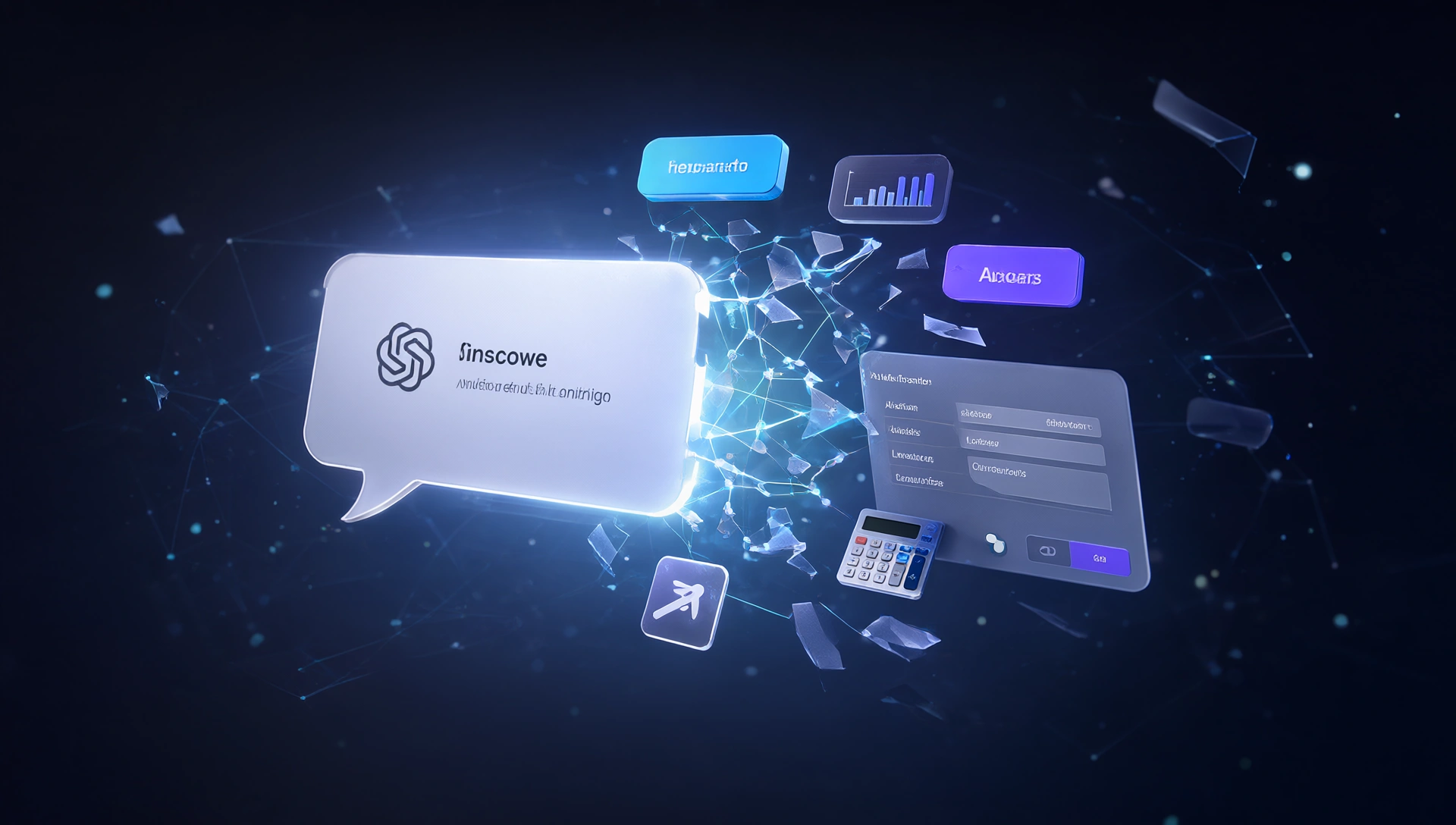
OpenAI shipped GPT-6 to ChatGPT worldwide last week, and almost nobody is talking about the model itself. They’re talking about the fact that your answers now come with buttons, forms, and charts you can actually touch. The intelligence upgrade is real, sure — but the thing that will quietly change how you use the internet is what the answers *look like*.
For ten years, the entire ChatGPT experience has been one thing: a box, you type, a box talks back in paragraphs. It’s the interface we all learned to love and quietly tolerate at the same time. On October 7, 2026, that interface cracked. Starting with Plus, Pro, Business, and Enterprise users, OpenAI began deploying what it calls GPT-6 Sol, carrying a headline capability called Intelligent UI that lets the model compose responses from interactive pieces — tappable buttons, fillable forms, live charts, diagrams, and even small self-generated tools — rather than dumping everything as prose. Two days later, on October 8, the free tier and Go subscribers got the equivalent GPT-6 Luna, completing the swap that retired GPT-5.6 Sol and GPT-5.6 Luna from the building entirely.
By the time you read this, more than 1.2 billion weekly active users are potentially staring at a ChatGPT that does something GPT-5.6 never could: hand you a working thing instead of a written description of a thing. Let’s break down what actually changed, what’s marketing gloss, and what the least-covered number in the whole announcement should make you sit up.
The Interface Is the Product Now
Here’s the uncomfortable truth OpenAI has been circling for two years: the frontier model has gotten so good that raw intelligence is becoming a commodity. GPT-5.6 could already write you a decent email, explain quantum entanglement, and roast your bad life choices in roughly the same breath. The next frontier — the one worth a version number — isn’t *what* the model knows, it’s *how it delivers the answer*.
Intelligent UI is OpenAI’s bet that the future of a chatbot isn’t a better essay. It’s a better *interface*. When you ask GPT-6 to compare three laptops, it doesn’t just give you three paragraphs of specs — it can build you a comparison table with checkboxes so you can filter by price, weight, or battery life. When you ask it to split a dinner bill across six friends who owe each other money, it doesn’t write out the arithmetic; it drops a working calculator into the conversation you can tweak. Ask it to sketch a floor plan for a home office, and you might get a diagram you can drag elements around in instead of a block of text telling you where the desk probably goes.
The genuinely clever part is that GPT-6 *chooses the format automatically based on your question*. You don’t toggle a “show me charts” switch. The model looks at what you’re actually asking, decides whether a button, a form, a chart, or a plain old sentence is the right tool, and serves it. That’s a subtle but important shift: the interface is no longer a fixed shell the model has to squeeze its output into. The interface is now an *output*, generated on the fly, tailored to the task.
Think about how weird that is for a moment. For a decade, software has been organized into apps — a calculator app, a spreadsheet app, a drawing app — each with its own buttons. GPT-6’s Intelligent UI is the first mainstream attempt to make the app *emerge from the conversation*. You ask for something, and the app builds itself around your request, then dissolves back into text when you move on. If that lands, it’s not an incremental upgrade. It’s the beginning of the end of the fixed app icon.
What GPT-6 Sol and GPT-6 Luna Actually Are
OpenAI’s naming scheme has always been a little cryptic, and this rollout is no exception. Behind the scenes, GPT-6 isn’t one model — it’s a small family, and the two names you’ll actually see are Sol and Luna.
GPT-6 Sol is the flagship. It rolled out on October 7, 2026, to the paid tiers: Plus, Pro, Business, and Enterprise. It’s the heavier, sharper model, the one OpenAI points to when it wants to show off reasoning muscle.
GPT-6 Luna is the efficiency variant. It landed October 8 for Free and Go users — and yes, that means anyone who’s never paid a cent for ChatGPT now has access to a GPT-6-class model for the first time. Luna is tuned to run faster and cheaper per query, which is how OpenAI can hand a frontier model to over a billion users without the electricity bill becoming a geopolitical event.
Both variants support Intelligent UI, so the free tier isn’t getting a crippled experience by design — it’s getting the same interface philosophy, just on a more frugal engine. The rollout also quietly retired the old labels: GPT-5.6 Sol and GPT-5.6 Luna are gone, replaced wholesale. If you were on the previous generation, you didn’t get an update so much as a replacement.
Why the two-name split at all? Because OpenAI has to serve a Stanford grad student writing a dissertation *and* a teenager at 2 a.m. asking the chatbot how to tell their parents they’re failing classes, from the same servers, on the same day. Sol is for the grad student who wants maximum depth and is willing to wait an extra second. Luna is for everyone else, optimized for speed and cost so the whole machine doesn’t collapse under its own weight. It’s the classic tech move: one brand name, two engines, and a paywall that determines which one you get. The clever bit is that with Intelligent UI, the experience looks similar enough on both that most people won’t notice which engine is under the hood — until it’s time to pay.
The Backend Wins Nobody Headlined
For all the fanfare around buttons and charts, the most important GPT-6 upgrades are the ones you feel but can’t screenshot: speed, search, and safety. OpenAI bundled these under the GPT-6 Astra umbrella — the “world’s most intelligent and aligned model,” as the company put it in its September announcement — and they’re the reason the showy frontend doesn’t fall apart under real-world use.
First, reasoning speed. The old complaint about frontier models was that “smarter” often meant “slower,” with users watching a progress bar crawl while the model thought hard. GPT-6 trims that latency substantially. Answers that used to take several seconds now arrive in what feels like real time, which matters enormously for an interface full of interactive elements — a chart that takes fifteen seconds to render turns “clever” into “annoying” within about four.
Second, web search performance. ChatGPT has slowly morphed from a knowledge engine into a search engine that happens to talk back, and GPT-6’s improved retrieval means it’s better at pulling current, relevant sources instead of confabulating with confidence. Ask it something time-sensitive — a stock price, a sports score, today’s headlines — and it’s more likely to get it right and tell you when it’s guessing.
Third, and this is the big one, is safety. OpenAI introduced what it calls “Astra” safety advances, with a specific emphasis on stronger jailbreak resistance and protections against high-risk misuse. In plain language: the guardrails that kept GPT-5.6 from being manipulated into producing dangerous instructions have been rebuilt and reinforced. The model is more resistant to the creative prompt-injection tricks that used to slip past, and it’s better at refusing requests that could cause real-world harm. Whether you think that’s a feature or a symptom of a much bigger debate about censorship, you can’t deny it’s a priority for the company — and a selling point when they’re chasing enterprise customers who need to know their AI won’t get hacked into doing something embarrassing.
The reason none of this made the catchy headlines is simple: a chatbot that’s fast, accurate, and refuses to build you a weapon is what you *expect*. Nobody writes a viral thread about the absence of bad behavior. But the backend is what makes the frontend trustworthy. A fancy interactive UI over a sloppy, slow, jailbreakable model would be a Ferrari paint job on a go-kart. GPT-6 apparently wanted the whole car.
The Number That Should Scare Everyone
Here’s the part of the announcement that got maybe ten percent of the coverage it deserves, and I think that’s a mistake.
OpenAI’s own deployment safety hub published a comparison on the MentalHealthBench benchmark — a standardized suite for evaluating how well AI systems handle mental-health-related conversations — and the results were unambiguous. Across *every single* MentalHealthBench conversation, GPT-6 Luna (October) outperformed GPT-5.6 Luna (August). GPT-6 Sol improved too, with the largest jump showing up in emergent mental-health conversations — the messier, less-scripted, genuinely difficult exchanges where a user isn’t following a script but is reaching out in real distress.
Let me translate what that means, because benchmark-speak hides how hard this actually is. Mental-health evaluation is one of the hardest possible jobs for an AI. There’s no right answer you can look up. The model has to read tone, avoid toxic positivity, never be dismissive, know when to encourage professional help, and do all of it without being preachy or cold. It’s the one category where getting it wrong isn’t an inconvenience, it’s a tragedy. And OpenAI is now *measuring* it, publicly, and publishing the scores.
That matters for two reasons. The first is the obvious one: the model genuinely got better at being a supportive, responsible presence, and it did so across the board, not just on the easy questions. The second is quieter and more significant: OpenAI is treating AI safety and emotional safety as *first-class products* worth benchmarking and comparing quarter to quarter. When a company starts publishing mental-health benchmark deltas, it’s admitting that this dimension of performance is a competitive differentiator, not just a compliance checkbox.
Does a higher score mean GPT-6 will be a great therapist? Absolutely not — and OpenAI wouldn’t claim it. It’s a chatbot, not a clinician, and anyone who treats it as a replacement for real care is missing the point. But it does suggest that the same engineering discipline that built Intelligent UI is being applied to the softer, harder-to-quantify skills. That’s a meaningful signal about where the whole industry is heading: the race isn’t just about who can solve the hardest math problem, but who can be the most human when it matters.
What This All Means for You and the Industry
Strip away the launch-day polish, and the GPT-6 rollout tells you three things about where AI is going.
One, the interface is finally part of the intelligence. For years, AI hype focused almost entirely on the brain and ignored the body. GPT-6 flips that. The model’s ability to *generate a working interface on demand* is a new kind of capability — one that could compress hundreds of narrow apps into a single conversational surface. If you can ask for a tool and get a working tool, the value of any single app icon drops. Watch what happens to categories like calculators, quick-look spreadsheets, and simple diagramming tools over the next twelve months.
Two, agentic and cost-efficient use is the real battleground. OpenAI explicitly framed this rollout as part of “rethinking how people interact with ChatGPT,” and the keywords beneath that are *agentic* and *cost-efficient*. Interactive components are the seed of agentic behavior — a button you click is the smallest possible act of the user directing the model toward an action. And the Sol/Luna split is a cost-management play so that frontier intelligence can scale to a billion users without bankruptcy. The companies that win the next decade won’t just build smarter models; they’ll build cheaper, more interactive, more *actionable* ones.
Three, safety is being productized. The Astra advances and the published MentalHealthBench numbers are the same story: safety is moving from the legal department to the product roadmap. In an industry that spent two years being accused of either over-censoring or under-guarding, OpenAI’s play is to make safety *measurable and marketable*. That’s genuinely encouraging — measurable things get improved.
For the everyday user, the practical upshot is delightfully simple: ChatGPT is about to get more useful in ways that are hard to describe in a press release. You’ll ask for things and get *tools* back. You’ll get charts instead of paragraphs, calculators instead of arithmetic, and — hopefully — a model that’s faster, smarter about what’s current, and more thoughtful about how it makes you feel. The subscription tiers decide which engine you sit on, but the interface philosophy reaches everyone, free tier included.
Concrete, near-term things you can expect:
- Faster answers that still feel smart — reasoning latency is trimmed so interactive elements land in real time instead of leaving you watching a spinner.
- Less finicky “hallucination” — improved web search means more current, better-sourced answers for anything time-sensitive.
- Tools instead of descriptions — split a bill, compare a purchase, or sketch a layout and get a working widget you can adjust, not just text about it.
- A gentler presence — the same engineering discipline is now aimed at mental-health support, with published benchmarks showing steady gains.
- Stronger guardrails — the “Astra” safety push makes the model harder to jailbreak and better at declining high-risk requests.
The Question OpenAI Can’t Answer Yet
GPT-6 has proven it can build you a working interface in three seconds. The question it hasn’t answered is what happens to the rest of the software world when the interface stops being fixed and starts being *generated*.
If a chatbot can render a calculator, a form, a chart, and a custom tool on demand — tailored to your exact question and then disappearing when you move on — what role do dedicated apps play? Who owns the moment when the “app” is just a temporary arrangement the model assembled to answer you? And as these interactive responses get more capable, where do we draw the line between “helpfully adaptive interface” and “everything is now a proprietary walled garden the model builds inside”?
OpenAI shipped the technology last week. The culture shock comes later. So tell us: when your chatbot starts *building software instead of just talking*, does that feel like the future you wanted, or the one you should be worried about?